Socialising with epilepsy
Whether you have epilepsy or are supporting someone with epilepsy,
here you can learn from others experiences.
Improve communication and relationships

“I find it really hard to tell people what I need. Especially my family when they were being a bit overprotective. It helps to just stay calm and kind of prepare what you’re going to say before you start.”
Guidance
Swipe for more guidance
Active listening and assertive communication (Thistle Foundation)
Good communication skills can help people with epilepsy and those who support them. Many people living with epilepsy feel isolated and may find it difficult to ask for help. They may also have to explain their needs to doctors, friends, family and colleagues, which can be very difficult.
Active listening is a good technique for friends and family members to try. This can help a person with epilepsy feel heard and not judged. It can also be used by people with epilepsy to help build stronger connections and relationships.
Assertive communication means to communicate clearly and calmly. This is a great technique when asking for help, explaining your needs to people or speaking to professionals.
The Thistle Foundation has provided a video and two written documents to help you improve communication through active listening and assertiveness.
Find social groups in your area

“I can’t tell you how much this group has transformed how I feel about everything. It’s just so much fun to meet up with people who share this and everyone is so kind. We don’t even talk about epilepsy we just go bowling and hang out.”
– Colin
Guidance
Swipe for more guidance
Quarriers Epilepsy Community Outreach (ECO) support
The Quarriers Epilepsy Community Outreach team offer support to those living in Aberdeenshire, Moray and Fife.
The team facilitates social groups to give people the chance to speak to others who understand what they’re going through.

Epilepsy Connections social activities
Across Greater Glasgow and Forth Valley, Epilepsy Connections offers a range of social group activities. This includes a one-to-one befriending service that helps to grow confidence, a Friends Connected social group, and an allotment garden in Glasgow.

Find social groups and services in your area with Aliss
Everyone has needs beyond epilepsy. People with epilepsy and those who support them can benefit from engaging in general social activities and local support services. Examples include…
Renfrewshire Carers Centre, which offers training and support for family and carers in Renfrewshire.
Dates-n-Mates, Scotland’s national dating and friendship agency run by and for adults with learning disabilities.
Compass, a charity who offer self management therapies including memory work to those with neurological conditions in Edinburgh.
Aliss is a Local Information Service for Scotland that offers contact details for clinical and social support groups. Use the directory to search for support in your area.
Contact the TSI Directory for Scotland
The Third Sector Interface (TSI) Scotland Network connects services and people to local organisations and charities. If you are a professional who supports someone with epilepsy, consider speaking to your local TSI to find out what referrals are available in your area.
Plan to overcome risks and challenges

“Sometimes it feels like going out is just not worth the risk but I think it’s all about managing the impact and taking baby steps to build up your confidence. When you think it through and plan it out, you can take some control back.”
“I’ve had an attack in the middle of Euston station, but some really nice strangers looked out for me until I could function well enough to catch my train. I guess what I’m saying is there are good people out there and not to be afraid.”
Guidance
Swipe for more guidance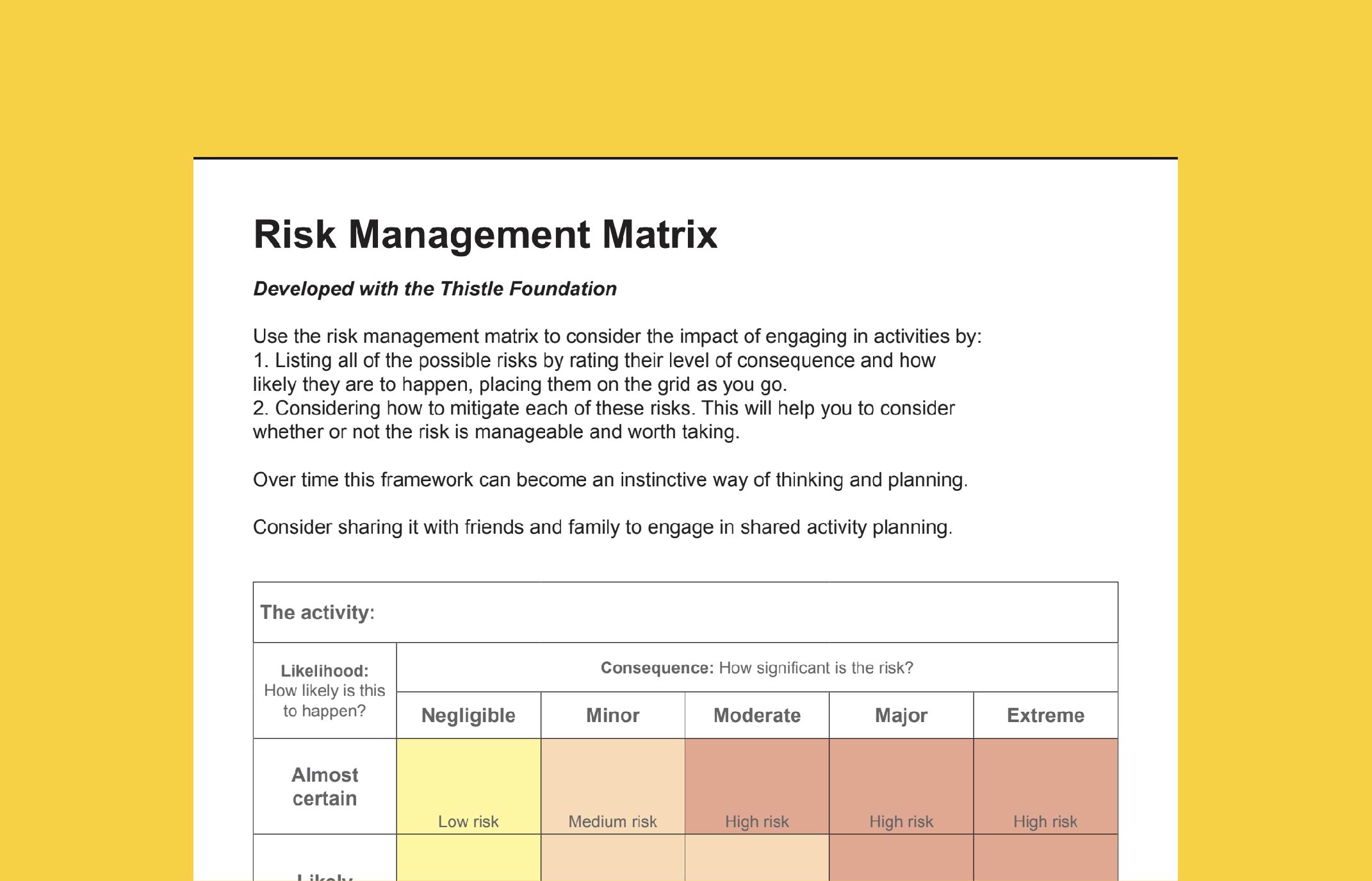
Risk Management Matrix (Thistle Foundation)
Fear of having seizures outside the home often leads people with epilepsy to stop leaving their homes altogether. Often others, who fear for the safety of loved ones with epilepsy, will reinforce this by encouraging them to stay inside. However, this only leads to a whole new set of problems including isolation from friends, family, work, education, exercise and all the other things that make life worthwhile. Finding a balance between protecting yourself and making sure you still have a meaningful life can be difficult, but it is crucial for maintaining your wellbeing.
Use the Thistle Foundation’s risk management matrix to plan your activities. List the possible risks and how likely they are to happen. Then consider how to reduce each one. This will help you to consider if the risk is worth taking. Over time this framework can become a way of thinking and planning.
Consider sharing it with friends and family to include them in shared activity planning. An example has been provided.

Safety Advice and Equipment (Epilepsy Action)
Alarms, monitors and identification products such as bracelets can help build your confidence when going out or engaging in activities at home.
National Entitlement Cards for Discounted Travel
Across Scotland, National Entitlement Cards (NEC) offer free or cheaper travel to young people, older people and people with a disability.
The Disabled Concessionary Travel cards include discounted travel on buses, trains, undergrounds and trams. If your card has a C+ symbol it allows a companion to travel with you for free.
You can apply for a National Entitlement Card online.
For more information about how to use them, visit your local council website or give them a call.